

LEGO bricks were cooled close to absolute zero by British Physics

photo by Joachim S. Müller
London, December 24th. British physicists have found that LEGO bricks practically do not allow heat to pass at temperatures that are close to absolute zero.
As it turned out, a certain location of the recesses and protrusions on the bricks makes the design a strong heat insulator. The authors of the scientific project noted that this useful characteristic can be used in the creation of scientific equipment. As an example, experts cited helium refrigerators.

During the study, the experts made a small wall of LEGO bricks. After that, the construction was left in the refrigerator and cooled to an ultra-low temperature. Then, for seven days, physicists monitored the state of the wall and found that the structures made of ABS plastic were more effective than heat-resistant glass.
According to scientists, similar plastic structures can increase the speed of creating quantum computers and reduce the cost of their development. In addition, the engineers from the Massachusetts Institute of Technology developed robotic bricks with a hive mind. The creators gave the name to the project - M-Block. According to experts, the robo-bricks can perform a variety of actions.
Related Posts
-

Start Saving Up: LEGO Breaks All Records with the Largest Set in History - Sagrada Família
The boundaries of scale and structural precision within the brick-building universe have been permanently redefined....
-
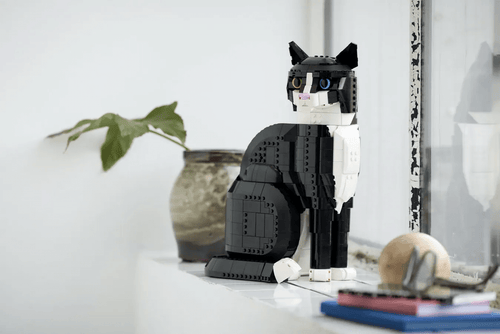
LEGO Unleashes Tuxedo Cat: A Purr-fectly Posable Pet Project!
LEGO has announced a new building set called "Tuxedo Cat," which was originally proposed by a fan on the LEGO Ideas ...
-

Upcoming Lego Technic releases in March 2023
LEGO is a beloved toy company that has been around for decades, and every year, fans eagerly await the release of ne...
