

LEGO bricks were cooled close to absolute zero by British Physics

photo by Joachim S. Müller
London, December 24th. British physicists have found that LEGO bricks practically do not allow heat to pass at temperatures that are close to absolute zero.
As it turned out, a certain location of the recesses and protrusions on the bricks makes the design a strong heat insulator. The authors of the scientific project noted that this useful characteristic can be used in the creation of scientific equipment. As an example, experts cited helium refrigerators.

During the study, the experts made a small wall of LEGO bricks. After that, the construction was left in the refrigerator and cooled to an ultra-low temperature. Then, for seven days, physicists monitored the state of the wall and found that the structures made of ABS plastic were more effective than heat-resistant glass.
According to scientists, similar plastic structures can increase the speed of creating quantum computers and reduce the cost of their development. In addition, the engineers from the Massachusetts Institute of Technology developed robotic bricks with a hive mind. The creators gave the name to the project - M-Block. According to experts, the robo-bricks can perform a variety of actions.
Related Posts
-

LEGO Doctor Doom Bust Is Here: The Ultimate Marvel Collector Set
Doctor Doom has officially arrived in the LEGO universe and this time, he isn't showing up in a tiny battle scene. W...
-
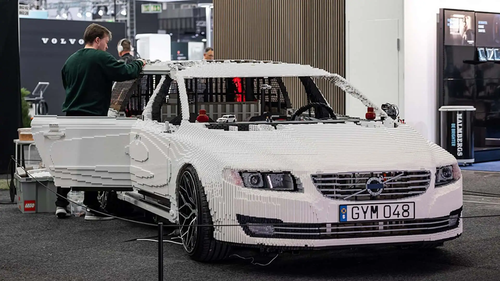
A Life-Size Lego Volvo You Can Actually Drive!
What happens when you combine a passion for Lego building sets and an iconic Swedish car? You get a fully functional...
-

Explore the Wonders of LEGO Harry Potter Hogwarts Castle and Grounds
Welcome, fellow enthusiasts of Lego and Hogwarts, to a world brimming with enchantment and wizardry! We have some ex...
-

Why building block toys are good for kids and adults?
Building blocks have been a popular toy for children for generations, and for good reason. These simple, versatile t...
